Author: Admin

  • Tragedy in Texas: Community Mourns After High School Shooting Leaves Student and Teacher Dead

    Tragedy in Texas: Community Mourns After High School Shooting Leaves Student and Teacher Dead

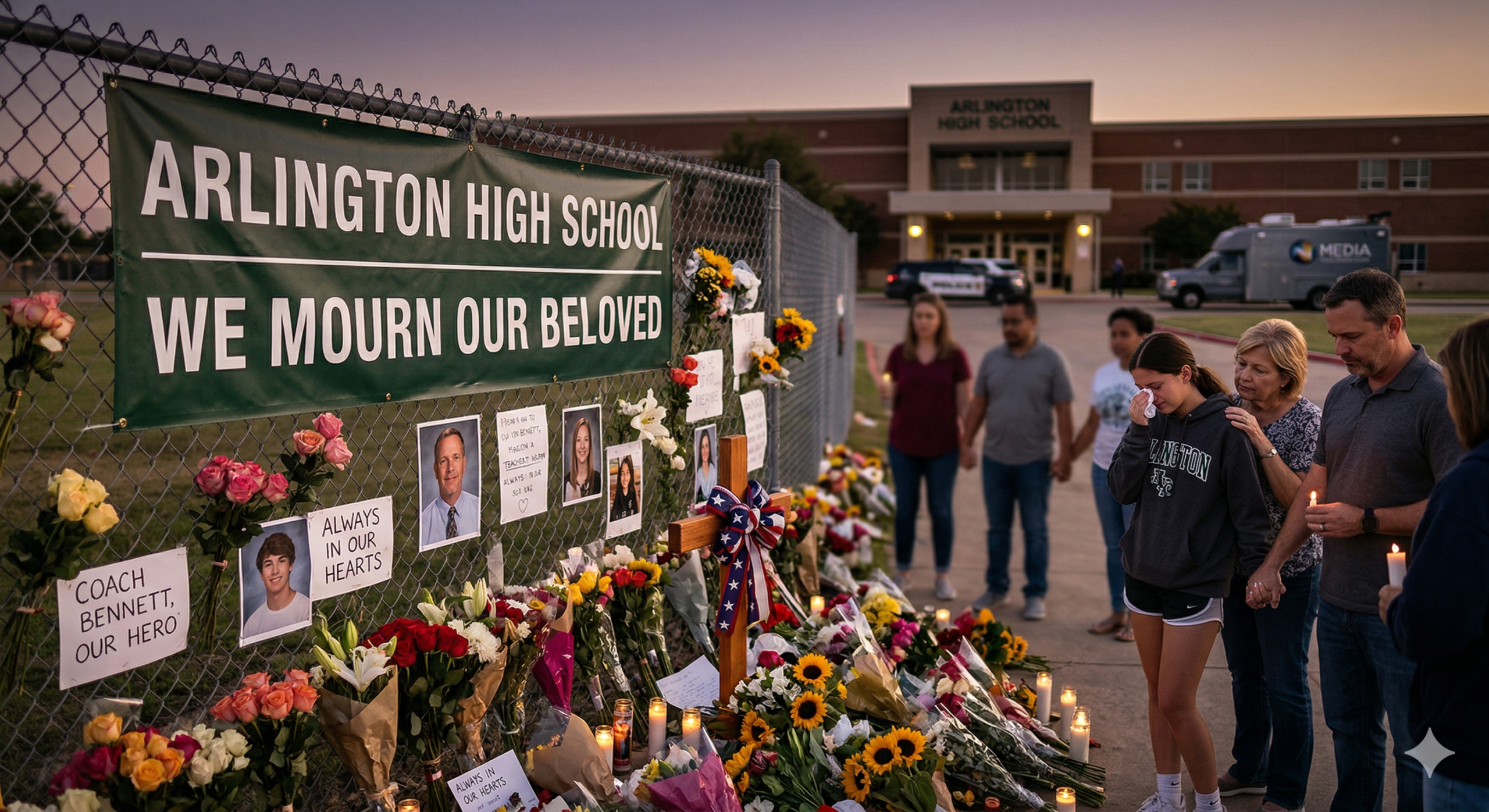
    ARLINGTON, TX — A community is grappling with profound grief after a shooting at a local high school on Monday morning claimed the lives of a beloved teacher and a teenage student. The incident, which occurred shortly after the first bell, has reignited the national conversation surrounding school safety and mental health resources.

    Authorities confirmed that the gunman, identified as a 17-year-old student at the school, is in custody. While a motive has not yet been officially established, investigators are looking into reports of a prior dispute.

    A Hero Remembered

    Among the victims was 42-year-old Marcus Bennett, a dedicated history teacher and basketball coach known for his “open-door policy” and mentorship. Witnesses reported that Bennett was killed while attempting to usher students into a locked classroom to shield them from the gunfire.

    “He died the way he lived—protecting his kids,” said a fellow faculty member during an emotional prayer vigil held Monday evening. “He wasn’t just a teacher; he was the heart of this hallway.”

    The second victim, a 16-year-old sophomore whose name is being withheld at the family’s request, was described by friends as a gifted artist and a quiet, kind soul.

    The Investigation Unfolds

    Arlington Police Chief Alisa Carter stated that the shooter used a semi-automatic handgun. Investigators are currently working to determine how the minor obtained the weapon. The school’s recently installed metal detectors were operational at the time, but police are investigating whether the suspect bypassed the main entrance.

    “This is a day that every parent and every officer dreads,” Chief Carter said during a press conference. “We are working tirelessly to provide answers to this community while ensuring justice is served for the families who lost everything today.”

    Community and Legislative Response

    The shooting has sent shockwaves through the state. Governor Greg Abbott issued a statement calling the act “senseless and horrific,” promising additional state resources for the grieving district. Meanwhile, advocacy groups gathered at the state capitol to renew calls for stricter “red flag” laws and increased funding for school-based mental health professionals.

    In the immediate aftermath:

    • School Closure: The high school will remain closed for the rest of the week, with grief counselors available at a nearby community center.
    • Security Review: The district has announced an emergency audit of security protocols across all campuses.
    • Vigils: Spontaneous memorials of flowers and candles have begun to grow along the school’s perimeter fence.

  • A Monumental Vision: Trump Organization Unveils Renderings for Presidential Library

    A Monumental Vision: Trump Organization Unveils Renderings for Presidential Library

    PALM BEACH, FL — The Trump Organization has officially released the first architectural renderings for the Donald J. Trump Presidential Library, a project described by Eric Trump as “the most spectacular and visited landmark in the world.”

    The proposed designs, unveiled Monday, showcase a sprawling, gold-accented complex situated near the President’s Mar-a-Lago club. The project aims to serve not only as a repository for the 45th and 47th President’s records but as a high-tech “monument to the MAGA movement.”

    A Design of “Unparalleled Luxury”

    The renderings, produced by a team of international architects, feature a massive glass-and-marble structure topped with a signature gold-leaf dome. According to the development plans, the facility will include:

    • The “Great Hall of History”: A multi-story atrium featuring interactive holographic displays of the President’s most significant rallies and international summits.
    • The Constitutional Wing: A dedicated space housing the original executive orders and documents from the 2017–2021 and 2025–present administrations.
    • A “Five-Star” Experience: Deviating from the traditional academic feel of past presidential libraries, this site includes a luxury hotel, a world-class steakhouse, and a private members-only lounge.

    Eric Trump’s Vision

    In an exclusive interview regarding the release, Eric Trump emphasized that the library would be entirely privately funded. “This isn’t just a building full of dusty boxes,” he stated. “This is a destination. We are building something that reflects the scale of my father’s impact on this country and the world.”

    The project is estimated to cost between $1.5 billion and $2 billion. The Trump Organization expects the library to draw millions of visitors annually, significantly boosting the local economy in Palm Beach County.

    The Debate Over Location and Legacy

    While supporters view the library as a fitting tribute to the President’s tenure, the project has already faced scrutiny from local zoning boards and environmental groups. Concerns have been raised regarding:

    • Traffic Congestion: Local residents have expressed fears that a landmark of this scale will create permanent gridlock on the narrow roads leading to the island of Palm Beach.
    • National Archives Involvement: Under the Presidential Records Act, the National Archives and Records Administration (NARA) must oversee the preservation of official documents. Discussions are ongoing regarding how the Trump Organization’s “commercial” approach will integrate with federal standards.
  • Guardians on Horseback: The Evolving Role of Park Police in the Nation’s Capital

    Guardians on Horseback: The Evolving Role of Park Police in the Nation’s Capital

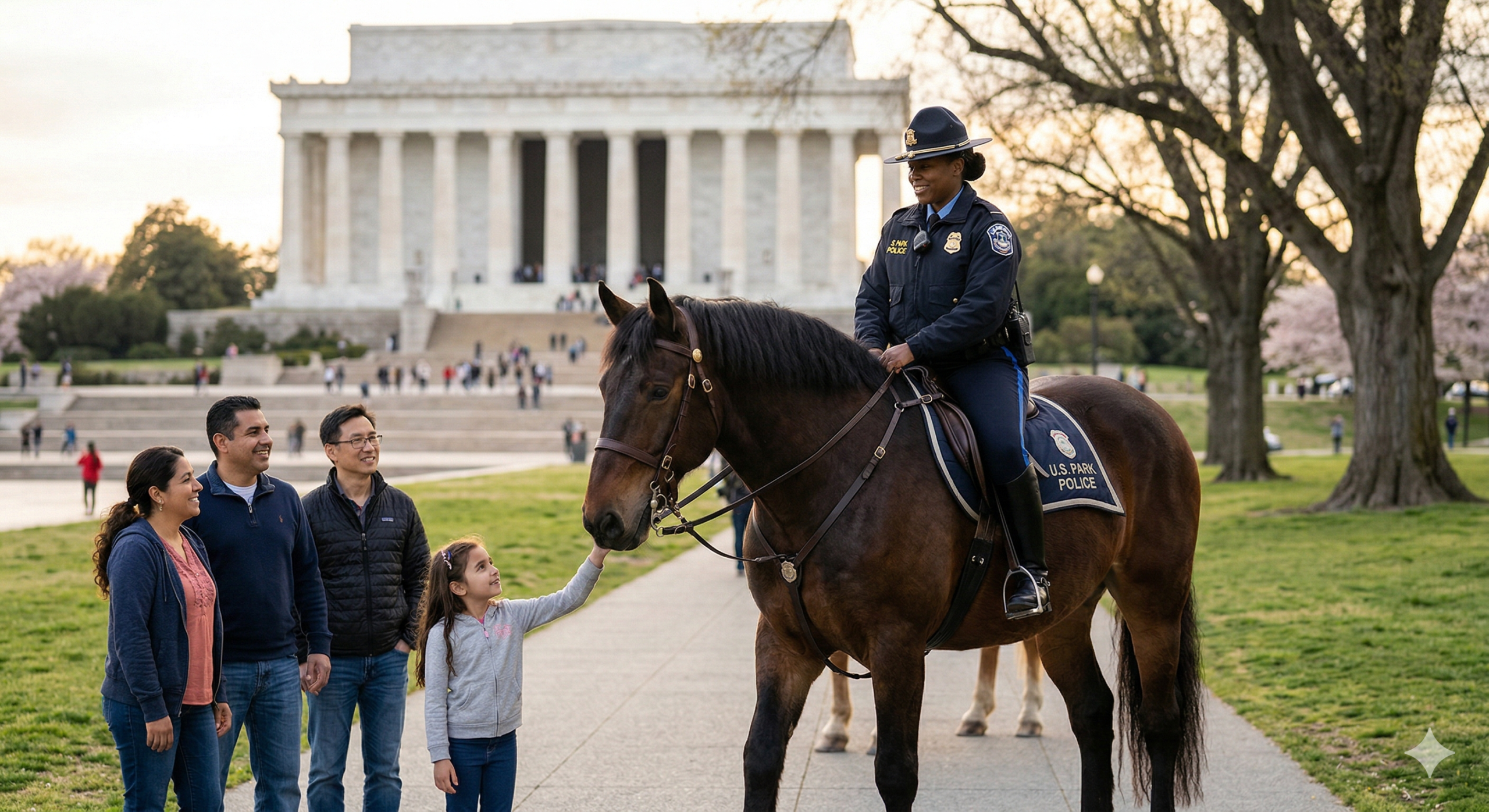
    WASHINGTON, D.C. — Amidst the sprawling monuments and historic green spaces of the National Mall, a centuries-old tradition remains one of the most effective tools for modern law enforcement. The United States Park Police (USPP) Horse Mounted Unit, a fixture of Washington’s landscape since the 1800s, is currently undergoing a strategic evolution to meet the security challenges of 2026.

    While technology like drones and advanced surveillance now monitors much of the capital, officials say the “four-legged officers” provide a unique advantage that machines simply cannot replicate.

    A High-Vantage Perspective

    The primary benefit of the mounted unit is simple geometry. An officer on horseback sits approximately 10 feet in the air, offering a line of sight that far exceeds that of an officer on foot or in a patrol car.

    In crowded areas like the Tidal Basin during Cherry Blossom season or major demonstrations at the Lincoln Memorial, this elevation allows officers to spot potential distress or security threats from hundreds of yards away. Conversely, the public can easily locate an officer when they need assistance in a dense crowd.

    Beyond Security: The Power of De-escalation

    Beyond tactical advantages, the National Park Service emphasizes the unit’s role in community relations. “A horse is a natural icebreaker,” says Sergeant Thomas Miller, a veteran of the unit. “People who might be hesitant to approach a patrol car will walk right up to a horse. It humanizes the badge.”

    This “soft power” is crucial for de-escalating tensions during large-scale protests. The sheer physical presence of a 1,500-pound animal can manage a crowd’s movement without the need for physical force, providing a psychological barrier that encourages order through presence rather than confrontation.

    Modernizing the Stables

    As the unit looks toward the future, the National Park Service is investing in the welfare of its equine partners. Recent initiatives include:

    • Sustainable Infrastructure: Renovations to the stables near the National Mall focus on better ventilation and eco-friendly waste management.
    • Specialized Training: Horses now undergo “urban desensitization” that includes exposure to low-flying drones, sirens, and specialized tactical gear to ensure they remain calm in high-stress environments.
    • Equine Retirement: A refined “rehoming” program ensures that when a horse reaches the end of its service life—typically after 10 to 15 years—it is placed in a high-quality sanctuary or private home.

    The Cost of Tradition

    Maintaining a mounted unit is more expensive than a motorized fleet, involving specialized veterinary care, farriers, and 24-hour stable staffing. However, the Department of the Interior maintains that the investment pays for itself in public safety and the preservation of the capital’s historic character.

    As Washington prepares for the upcoming summer tourist surge, the rhythmic sound of hooves on pavement remains a reassuring signal that some of the city’s oldest guardians are still on the watch.

  • Deja Vu in Phoenix: All-Top Seed Final Four Returns for 2026

    Deja Vu in Phoenix: All-Top Seed Final Four Returns for 2026

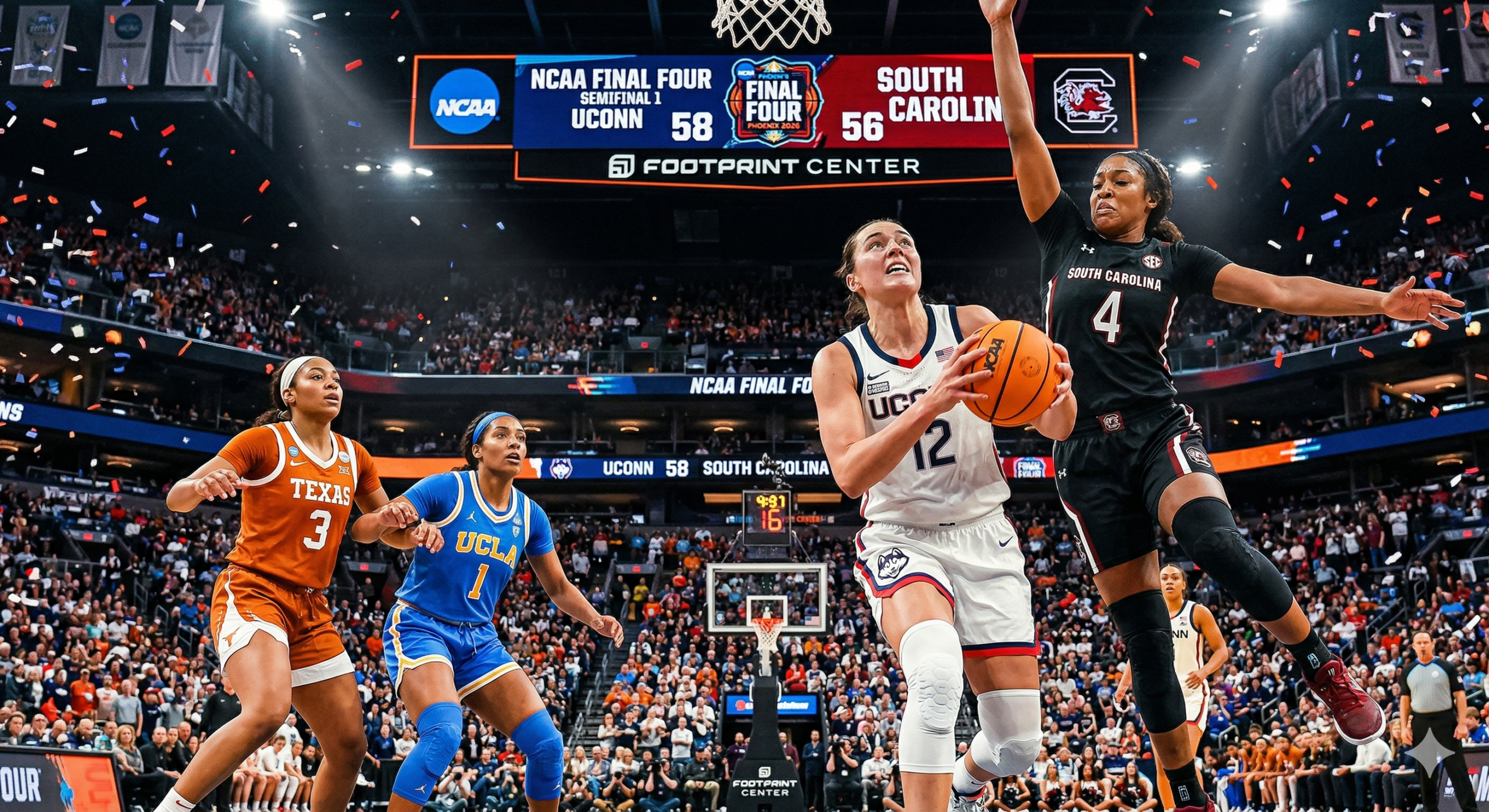
    PHOENIX — For the first time in nearly three decades, the NCAA Women’s Final Four is a complete repeat. No. 1 seeds UConn, UCLA, Texas, and South Carolina have all punched their tickets to the desert, marking just the second time in history that the exact same four teams have reached the national semifinals in consecutive years.

    While the cast remains the same, the matchups and stakes have shifted as the action moves to the Footprint Center this Friday.

    The Matchups: Rematches and Revenge

    The semifinals will feature a flip of last year’s pairings, setting the stage for high-drama storylines:

    • UConn vs. South Carolina: This is the heavyweight rematch of the 2025 national championship game. The undefeated Huskies will look to defend their crown, while the Gamecocks seek redemption for last year’s title loss.
    • UCLA vs. Texas: The Bruins and Longhorns meet again on the big stage. Texas holds the mental edge, having handed UCLA its only loss of the season back in November.

    UConn’s Quest for Perfection

    Led by legendary coach Geno Auriemma, the Huskies (38-0) are four quarters away from completing their seventh undefeated season in program history. Currently riding a 54-game winning streak, UConn has been clinical in the tournament, winning by an average of nearly 38 points.

    First-team All-Americans Sarah Strong (18.1 PPG) and Azzi Fudd anchor a roster so deep that eight different players average at least six points per game. “We can have anyone off the bench step up and change the pace,” Strong noted after their Elite Eight win over Notre Dame.

    The Contenders: Dominance and Defense

    The road to the title won’t be easy, as three of the most physical teams in the country stand in UConn’s way:

    • South Carolina (35-3): Making their sixth straight Final Four appearance under Dawn Staley, the Gamecocks are defined by a stifling defense that holds opponents to just 57.6 points per game. Freshman sensation Joyce Edwards leads a balanced attack with 19.6 points per game.
    • Texas (36-3): The Longhorns secured their spot with a dominant 77-41 blowout of Michigan. With All-American Madison Booker and veteran guard Rori Harmon at the helm, Texas is looking for its first national title since their undefeated 1986 run.
    • UCLA (35-1): Behind the interior dominance of Lauren Betts, who posted 23 points and 5 blocks in the Elite Eight, the Bruins are aiming for their first-ever NCAA championship.

    Historical Context

    The only other time the Women’s Final Four saw the same four teams in back-to-back years was 1995-1996, featuring UConn, Tennessee, Stanford, and Georgia.

    As the “Big Four” of the current era prepare to clash, the basketball world waits to see if UConn’s dynasty will continue or if a new champion will emerge from the familiar field.

  • SCOTUS to Decide: The Future of Birthright Citizenship in America

    SCOTUS to Decide: The Future of Birthright Citizenship in America

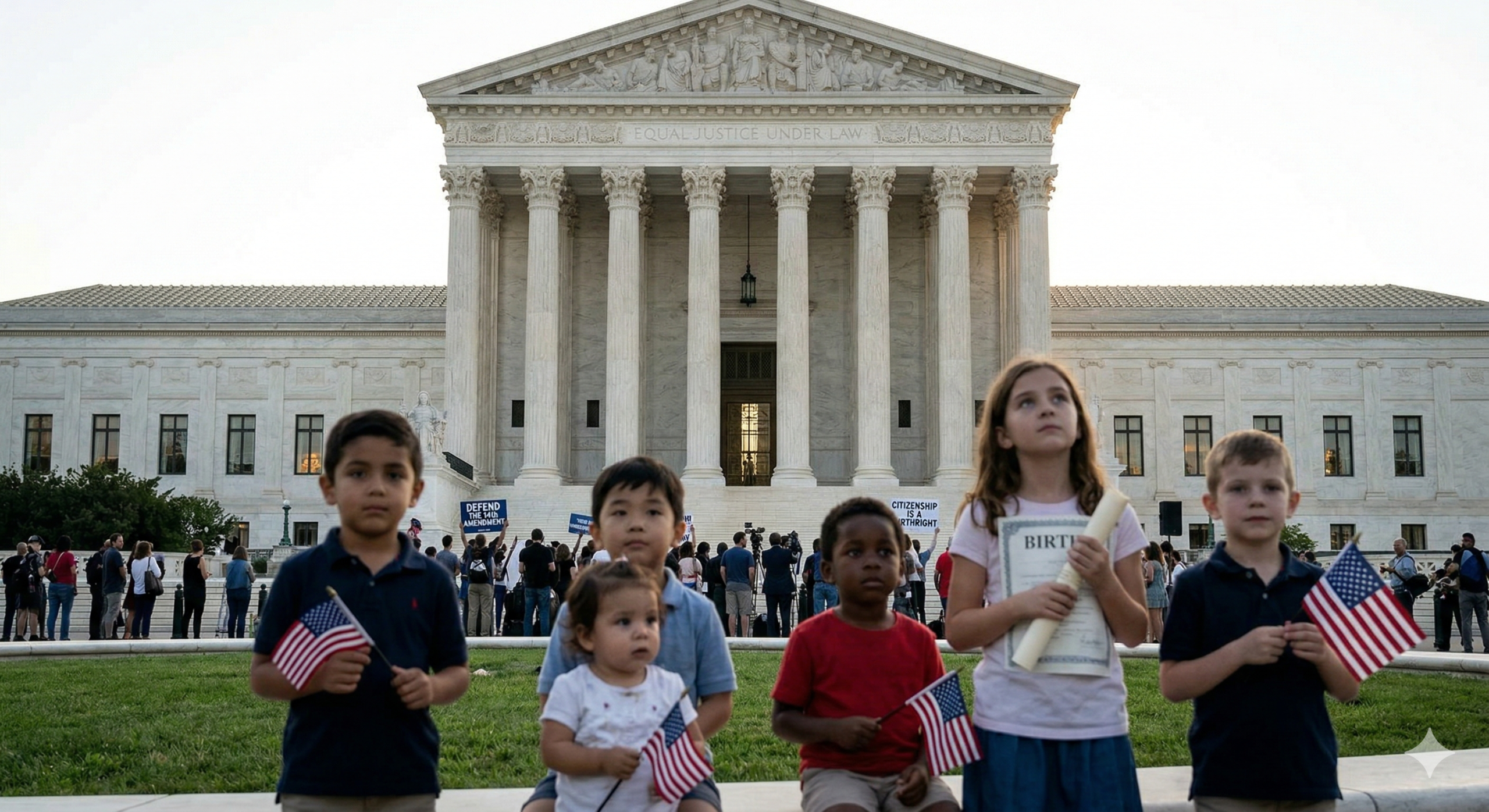
    WASHINGTON — In a move that could fundamentally redefine American identity, the Supreme Court is set to hear oral arguments tomorrow, April 1, 2026, in the case of Trump v. United States. The landmark challenge centers on the administration’s executive order aimed at ending automatic birthright citizenship for children born in the U.S. to undocumented parents.

    This case represents the most significant test of the 14th Amendment in over a century, pitting the administration’s “sovereignty-first” immigration policy against 158 years of established constitutional interpretation.

    The Core of the Conflict

    On January 20, 2025, President Trump signed Executive Order 14160. The directive instructs federal agencies to stop issuing Social Security numbers and citizenship-based birth certificates to children born on U.S. soil unless at least one parent is a U.S. citizen or a lawful permanent resident.

    The administration’s legal team argues that the 14th Amendment’s phrase “subject to the jurisdiction thereof” was never intended to apply to the children of those present in the country without legal authorization. They contend that citizenship should be a “consensual” relationship between a nation and an individual, rather than a matter of geographical location.

    The Constitutional Battle

    Opponents, led by a coalition of civil rights groups and several states, argue that the President is attempting to bypass the Constitution. They rely on the 1898 precedent United States v. Wong Kim Ark, which affirmed that a child born in the U.S. to immigrant parents is a citizen regardless of the parents’ status.

    Legal scholars note that the 14th Amendment was written specifically to ensure that citizenship is a birthright, protecting it from the political whims of any single administration. The challengers argue that if the government wants to change this rule, it must pass a Constitutional Amendment, not an executive order.

    What is at Stake?

    The practical implications of the Supreme Court’s eventual ruling are massive:

    • Legal Status of Thousands: Approximately 250,000 babies are born annually in the U.S. to undocumented parents. Their legal identity now hangs in the balance.
    • Documentation Burdens: If the order is upheld, a U.S. birth certificate would no longer be sufficient proof of citizenship for many. Parents would be required to provide proof of their own legal status to secure passports or benefits for their children.
    • Long-term Social Impact: Critics suggest that ending birthright citizenship would create a permanent “underclass” of residents who are born in the U.S. but lack the basic rights of citizens.

    A Divided Court

    The current 6-3 conservative majority on the Supreme Court has previously shown an inclination to reconsider long-standing administrative and legal precedents. While the Court has not yet ruled on the merits of this specific case, it previously allowed the administration to begin certain implementation phases while the legal challenges moved through the lower courts.

    As the justices prepare to hear arguments, the nation remains deeply polarized. The final ruling, expected by late June 2026, will determine whether “birthright” remains an absolute constitutional guarantee or becomes a policy subject to executive change.