Category: National News

  • Analysis: Key Takeaways from the Supreme Court’s Decision to Hear the Birthright Citizenship Case

    WASHINGTON — The U.S. Supreme Court has sent shockwaves through the American legal system by agreeing to hear United States v. [Challenger], a case that could dismantle over a century of settled law regarding birthright citizenship. Following the administration’s formal petition, the Court’s decision to grant certiorari on an expedited basis suggests that a transformative ruling is imminent.

    As the nation prepares for oral arguments in late 2026, here are the critical takeaways from the Court’s announcement and what they signal for the future of the 14th Amendment.

    1. The “Originalist” Supermajority is Ready to Engage

    By taking this case, the Court’s conservative majority has signaled a willingness to revisit United States v. Wong Kim Ark (1898). The administration’s argument hinges on “originalism”—the idea that the 14th Amendment was written to provide citizenship to formerly enslaved people, not to the children of those present in the country without legal authorization. The Court’s interest suggests they find the “jurisdiction” clause of the Amendment ripe for a modern re-interpretation.

    2. The End of “Settled Law”

    For 128 years, the consensus has been that “born in the U.S.A.” equals “U.S. Citizen.” By merely placing this on the docket, the Supreme Court has effectively ended the era of “settled law” on this issue. This mirrors the Court’s approach to Dobbs, where long-standing precedents were scrutinized under a new judicial philosophy that prioritizes historical text over decades of subsequent practice.

    3. A Potential “Tiered” Citizenship System

    Legal analysts are closely watching the wording of the questions the Court has agreed to answer. There is a possibility the Court won’t issue a total ban, but rather a “middle-ground” ruling. This could create a tiered system where citizenship is only automatic if at least one parent is a citizen or a legal permanent resident, leaving others in a state of “deferred status” or “permanent residency” without a path to a passport.

    4. Massive Implications for Federal Agencies

    If the Court rules in favor of the administration, the logistical fallout will be immense.

    • The SSA and State Department: Social Security and Passport offices would immediately need to change their verification processes.
    • Hospitals: Birth certificates might no longer serve as prima facie evidence of citizenship, requiring parents to provide their own immigration papers at the time of delivery.

    5. The 2026 Midterm “Lightning Rod”

    The timing of the Court’s decision—likely to be handed down in the heat of the 2026 midterm election cycle—guarantees that birthright citizenship will be the central campaign issue for both parties. For the administration, it is a fulfillment of a cornerstone promise; for the opposition, it is a “constitutional emergency” that will be used to galvanize voters.

    6. International Repercussions

    The U.S. is one of the few developed nations that offers unrestricted jus soli (right of the soil) citizenship. A move away from this policy would bring the U.S. closer to the “jus sanguinis” (right of blood) models used in much of Europe and Asia. This shift could fundamentally change the United States’ global identity as a “nation of immigrants.”
  • Case Closed After 51 Years: DNA Definitively Links Ted Bundy to 1974 Utah Murder

    SPANISH FORK, UT — Half a century after a 17-year-old girl vanished on Halloween night, the Utah County Sheriff’s Office has announced a major breakthrough. Using advanced forensic technology, investigators have definitively linked the 1974 murder of Laura Ann Aime to the notorious serial killer Ted Bundy.

    While Bundy had verbally confessed to the killing shortly before his 1989 execution in Florida, authorities kept the case open for decades, refusing to officially close it until scientific proof could confirm his involvement beyond a shadow of doubt.

    A Halloween Night Tragedy

    On October 31, 1974, Laura Ann Aime left a party in Lehi, Utah, to walk to a nearby convenience store. She never returned. Her body was discovered nearly a month later by hikers in American Fork Canyon. The scene was gruesome: she had been bound, severely beaten, and strangled with a nylon stocking.

    Evidence at the time suggested Aime had been kept alive for several days after her abduction, a chilling hallmark of Bundy’s modus operandi during his mid-70s killing spree across the American West.

    The Science of “Irrefutable Proof”

    The breakthrough came through a renewed effort by the Utah County Cold Case team. In 2025, investigators submitted carefully preserved evidence—some of it over 50 years old—to the Utah Department of Public Safety’s crime lab.

    The technological turning point included:

    • Advanced Extraction: New forensic tools adopted in 2023 allowed scientists to extract usable DNA from samples that were previously considered too degraded or small to analyze.
    • National Database Match: Once a clean male DNA profile was isolated, it was run against the national law enforcement database. The result was a perfect match for Theodore “Ted” Bundy.
    • Consensus of Evidence: The DNA findings mirrored the physical evidence and the verbal “confessions” Bundy gave to investigators in his final hours.

    “Healing, If Not Closure”

    At a press conference on Wednesday, Utah County Sheriff’s Sgt. Mike Reynolds spoke emotionally about the significance of the find for the Aime family and the community.

    “Laura Aime is the quintessential daughter of Utah County,” Reynolds said. “We felt the pain the family feels when she was taken. Our goal was to deliver some type of healing. We can’t really say ‘closure’ after 50 years, but we can finally say, with absolute certainty, who did this.”

    The Bundy Legacy

    Ted Bundy is believed to have murdered at least 30 women and girls across several states, including Washington, Oregon, Colorado, Utah, and Florida. His “charming” persona and ability to blend into society made him one of the most feared figures in American criminal history.

    Authorities noted that if Bundy were alive today, this new DNA evidence would have been used to seek an additional capital conviction.

    A Resource for Other Agencies

    The Sheriff’s Office stated that the specific DNA markers identified in this testing will be shared with other law enforcement agencies across the country. It is hoped that this data may help clear other unsolved “Bundy-era” cold cases where degraded DNA evidence previously stalled investigations.

    For the family of Laura Ann Aime—remembered as a “free spirit” who loved horses and the outdoors—the 51-year wait for an official answer has finally come to an end.

  • Midnight Reprieve: Congressional Leaders Strike Deal to Avert DHS and TSA Shutdown

    WASHINGTON — In a dramatic 11th-hour breakthrough, Congressional leaders announced early Wednesday that they have reached a bipartisan agreement to fund the Department of Homeland Security (DHS), narrowly averting a catastrophic shutdown of the nation’s airports and border operations.

    The deal, struck just hours before a midnight deadline, ensures that hundreds of thousands of “essential” federal employees—including TSA agents and Border Patrol officers—will continue to receive their paychecks without interruption as the busy spring travel season ramps up.

    The “Spring Break” Pressure Cooker

    The stakes for this round of funding negotiations were particularly high. With millions of Americans traveling for spring break, a TSA shutdown would have resulted in immediate, massive delays at security checkpoints nationwide.

    Under a shutdown, “essential” workers are required to stay on the job but do so without pay until a budget is passed. Historically, this leads to high “call-out” rates as officers struggle with the financial burden of commuting and childcare without a steady income.

    Key Components of the Deal

    While the full text of the legislation is still being finalized for a floor vote, early reports indicate the compromise includes:

    • Border Security Funding: A significant increase in technology and personnel for the southern border, a key demand from House Republicans.
    • TSA Pay Equity: Continued funding for the pay raises implemented last year, ensuring TSA salaries remain competitive with the private sector.
    • Cybersecurity Grants: Enhanced funding for the Cybersecurity and Infrastructure Security Agency (CISA) to protect state and local governments from increasing ransomware threats.
    • FEMA Disaster Relief: A replenishment of the Disaster Relief Fund (DRF), which had been nearing “emergency-only” levels following a string of winter storms.

    A Temporary Fix?

    The agreement is structured as a “Continuing Resolution” (CR) that will fund the department through the end of the 2026 fiscal year in September. While this provides immediate stability, it sets the stage for another high-stakes battle over the 2027 budget later this fall.

    “Nobody got everything they wanted, but we got what the American people needed: a functional government and secure borders,” said a senior member of the Senate Appropriations Committee.

    Impact on Travelers

    For the average traveler, the deal means business as usual.

    • TSA Checkpoints: Will remain fully staffed.
    • Customs Processing: Will continue at normal capacity for international arrivals.
    • Global Entry/PreCheck: Enrollment centers will remain open for scheduled appointments.

    What Happens Next?

    The House and Senate are expected to hold formal votes on the package by Wednesday afternoon. President Biden has already indicated he will sign the measure immediately upon its arrival at his desk.

    As the threat of a shutdown recedes, the focus in Washington shifts to the broader 2027 budget proposals, where the same partisan divisions over immigration and spending are expected to resurface

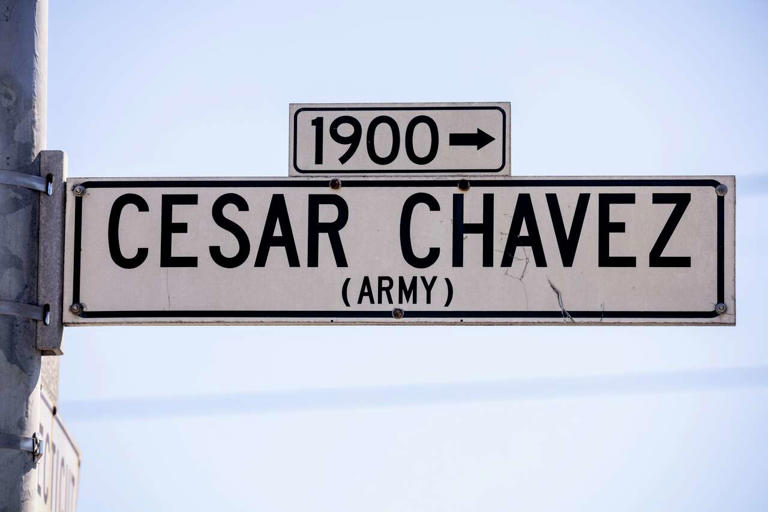
  • Honor and Legacy: Understanding César Chávez Day 2026 in California

    Honor and Legacy: Understanding César Chávez Day 2026 in California

    SACRAMENTO — As March comes to a close, residents across the Golden State are pausing to observe César Chávez Day. Established to honor the enduring legacy of the legendary labor leader and civil rights activist, the holiday serves as both a day of rest for many and a “day of service” for others, reflecting the values of the man who co-founded the United Farm Workers (UFW).

    While the holiday is firmly rooted in California history, its observation can sometimes lead to confusion regarding what remains open and the specific impact on public services.

    Is Today a State Holiday?

    Yes. In California, César Chávez Day is an official state holiday observed annually on March 31, which corresponds with Chávez’s birthday.

    Because it is a state-recognized holiday, the following typically applies:

    • Government Offices: Most state, county, and city government offices are closed.
    • Courts: All California state courts are shuttered for the day.
    • Schools: Most K-12 public schools and state universities (CSU and UC systems) are closed, though some local districts may coordinate their spring breaks to align with the date.
    • Mail Delivery: Because this is a state holiday and not a federal one, the U.S. Postal Service operates as usual, and mail delivery continues uninterrupted.

    Who was César Chávez?

    César Chávez (1927–1993) was a Mexican-American farm worker who became the most recognized face of the American labor movement. Alongside Dolores Huerta, he championed the rights of underpaid and overworked agricultural laborers, utilizing non-violent tactics such as strikes, boycotts, and hunger strikes to secure better wages and working conditions.

    His motto, “Sí, se puede” (Yes, it can be done), remains a powerful rallying cry for social justice movements worldwide.

    The “Day of Service” Tradition

    In 2014, President Barack Obama proclaimed March 31 as César Chávez Day at the federal level, encouraging Americans to use the day for community service. While it is not a “paid” federal holiday for most non-state employees, many organizations use the date to:

    • Organize Food Drives: Supporting modern-day agricultural communities.
    • Community Clean-ups: Beautifying local parks and public spaces.
    • Educational Seminars: Teaching the history of labor rights and the importance of collective bargaining.

    Impact on Private Business

    For those working in the private sector, the day is typically a standard workday unless otherwise specified by individual company policy. Banks and the stock market remain open, as they follow the federal holiday calendar.

    How to Observe

    Across California, various cities host marches, festivals, and community breakfasts. In cities like Los Angeles, San Jose, and Sacramento, “Chávez Day” is often marked by large-scale volunteer events aimed at addressing food insecurity—a cause central to Chávez’s life mission.

    As California enters the spring season, the holiday serves as a poignant reminder of the hands that harvest the nation’s food and the ongoing struggle for labor dignity in the 21st century.

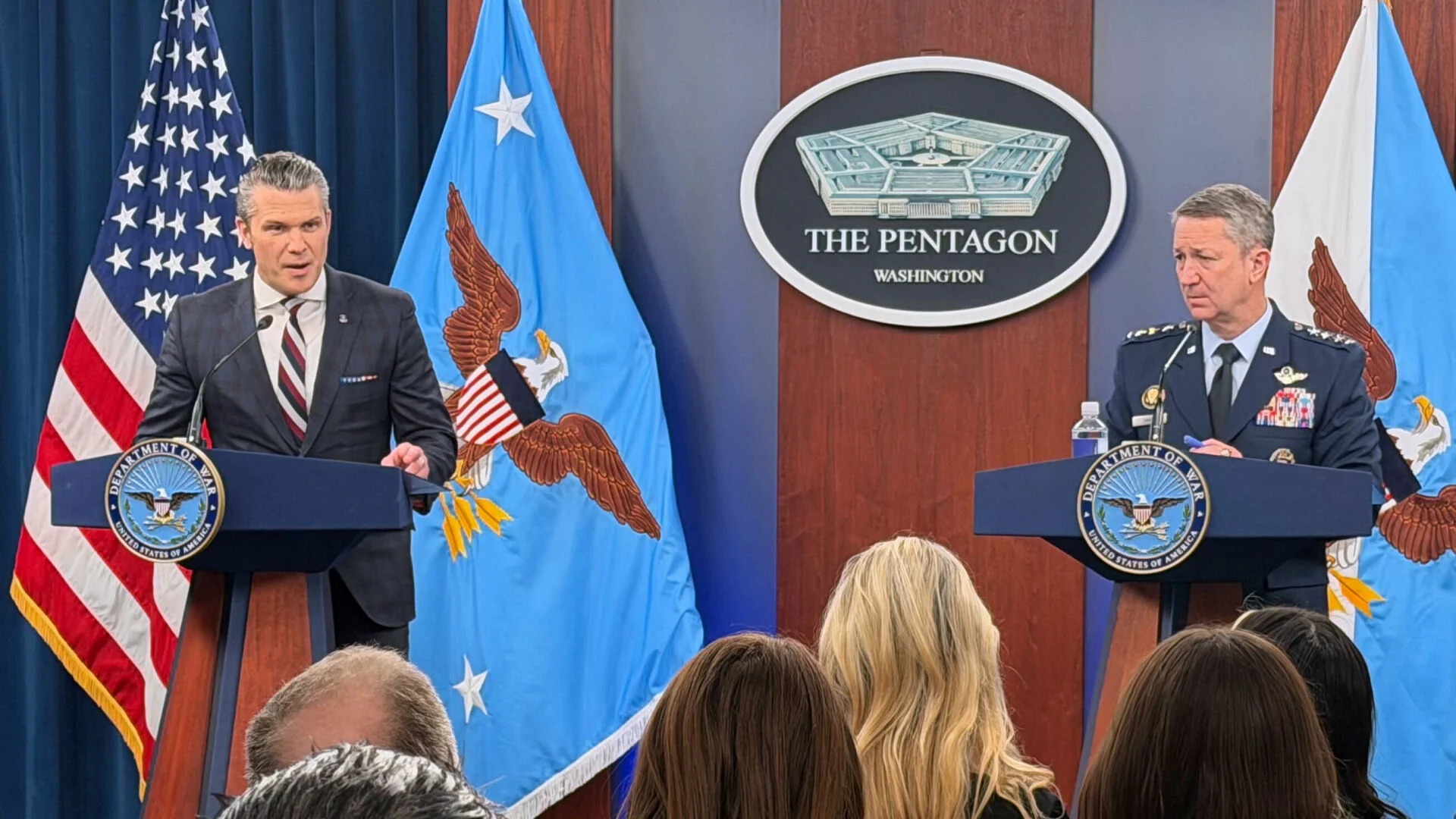
  • Strategic Pivot: Defense Secretary Pete Hegseth Outlines Troop Deployment and the Path to Ending the Iran Conflict

    Strategic Pivot: Defense Secretary Pete Hegseth Outlines Troop Deployment and the Path to Ending the Iran Conflict

    WASHINGTON — In a landmark briefing Tuesday, Defense Secretary Pete Hegseth provided the most detailed look yet at the administration’s military strategy regarding Iran, focusing on the critical Strait of Hormuz and the long-term goal of bringing the current hostilities to a decisive end.

    Hegseth’s address signaled a shift toward “overwhelming naval presence” designed to ensure global energy security while simultaneously setting the stage for a withdrawal of ground forces.

    Securing the Strait of Hormuz

    A primary focus of the Secretary’s remarks was the Strait of Hormuz, the world’s most sensitive oil transit chokepoint. Following recent skirmishes, Hegseth announced the deployment of additional carrier strike groups and advanced underwater surveillance drones to the region.

    “The Strait of Hormuz will remain open,” Hegseth stated. “We are not interested in a permanent occupation, but we will maintain the capability to neutralize any threat to international shipping lanes within minutes.”

    Deployment Logistics and High-Tech Warfare

    Hegseth detailed a “recalibrated” deployment strategy. Rather than large-scale infantry build-ups, the U.S. is leaning heavily on:

    • Rapid Response Units: Smaller, highly mobile elite teams capable of surgical strikes.
    • Integrated AI Defense: Utilizing automated systems to intercept incoming missile threats before they reach regional allies.
    • Cyber Interdiction: Disrupting command-and-control structures to prevent escalations without the need for traditional kinetic fire.

    Defining the “End State”

    The most significant portion of the briefing addressed how the war in Iran might actually end. Hegseth rejected the idea of a “forever war,” emphasizing that the administration’s goal is “strategic decapitation” of hostile capabilities rather than nation-building.

    “Our mission is clear: dismantle the threat, secure the waterways, and bring our troops home,” Hegseth said. “We are defining the end state by the total removal of Iran’s ability to project regional terror, not by the number of years we stay on the ground.”

    Domestic and International Reaction

    The Secretary’s “strength-first” approach has drawn mixed reactions:

    • Congressional Support: Proponents argue that a clear, aggressive stance is the only way to deter further Iranian aggression and protect the global economy.
    • Diplomatic Concerns: Some international allies expressed worry that the increased naval presence could lead to an accidental escalation in one of the world’s most crowded waterways.

    The Road Ahead

    As additional assets move into the Persian Gulf, Hegseth confirmed that the Department of Defense is working on a 12-month “stability roadmap.” This plan aims to transition security responsibilities to a coalition of regional partners, provided specific “security benchmarks” are met by late 2026.

    The briefing serves as a stern warning to Tehran while attempting to reassure a domestic audience wary of long-term Middle Eastern entanglements.

  • “No Kings” Movement: Iconic Signs and Massive Crowds Define a New Era of Protest

    “No Kings” Movement: Iconic Signs and Massive Crowds Define a New Era of Protest

    WASHINGTON — Across the United States, a burgeoning grassroots movement under the banner “No Kings” has taken to the streets, filling city squares and national landmarks with a sea of creative defiance. What began as a legal debate over executive immunity has transformed into a visual and cultural phenomenon, captured in a series of striking photographs and viral posters that define the spring of 2026.

    From the steps of the Lincoln Memorial to the civic centers of the Midwest, the “No Kings” rallies are characterized not just by their size, but by a unique aesthetic of DIY political art.

    The Anatomy of a Movement

    The “No Kings” slogan emerged following a series of controversial judicial rulings and executive actions that critics argue have concentrated too much power in the presidency. The movement’s core message is simple: In a democracy, no one is above the law.

    The rallies have drawn a cross-section of American life—students, veterans, and legal scholars—all united by the concern that the fundamental checks and balances of the U.S. government are being eroded.

    The Art of Defiance: Unique Signs and Symbols

    The most recent gallery of photos from the D.C. rally showcases a level of creativity rarely seen in modern protests. Some of the most frequently photographed signs include:

    • The “Scale of Justice” Poster: A minimalist design showing a scale tipped heavily by a golden crown, with the caption, “Weightless Without Accountability.”
    • Historical Callbacks: Hundreds of protesters have been seen carrying replicas of 18th-century revolutionary pamphlets, modernized with 21st-century QR codes that link to the text of the Constitution.
    • The “Empty Throne”: A recurring visual theme in many rallies involves a literal empty chair placed on a stage, symbolizing the office of the presidency as a temporary seat of service rather than a permanent seat of power.

    A Peaceful but Resolute Presence

    Despite the high-stakes political nature of the protests, the atmosphere has remained remarkably disciplined. Organizers have utilized “peace marshals” to ensure that the focus remains on the constitutional message.

    “We aren’t here to tear anything down,” said Marcus Thorne, a local organizer in Chicago. “We are here to remind the people in that building that they work for us. The signs are funny, the art is great, but the message is deadly serious.”

    The Digital Echo

    The movement has found a massive second life online. High-resolution photos of the “No Kings” crowds have become the backdrop for a new wave of digital activism. Analysts suggest that the “visual identity” of this movement—the specific shades of blue and gold and the “No Kings” typography—has helped it scale faster than previous protests.

    Looking Ahead

    With more rallies planned for the early summer, the “No Kings” movement shows no signs of slowing down. Legal experts suggest that the sheer visibility of these protests is putting pressure on legislative bodies to consider new “Accountability Acts” to clarify the limits of executive power.

    As the 2026 election cycle approaches, these photos and signs serve as a vivid reminder of the enduring American tradition of public dissent.

  • Thirsting for Relief: Western States Face Harsh Water Restrictions Despite Strong Winter Snowpack

    Thirsting for Relief: Western States Face Harsh Water Restrictions Despite Strong Winter Snowpack

    DENVER — Despite a winter that brought near-normal snowfall to much of the Rocky Mountains, the American West is bracing for a summer of unprecedented water restrictions. State officials and climatologists warn that “average” winters are no longer enough to offset decades of systemic drying, leaving the region’s reservoirs at dangerously low levels as the 2026 spring runoff begins.

    From the Colorado River Basin to the Central Valley of California, the gap between water supply and human demand is reaching a breaking point, forcing a fundamental shift in how the West manages its most precious resource.

    The Mirage of a “Normal” Winter

    While residents in ski towns celebrated a steady string of winter storms, the reality on the ground is more complex. Climatologists point to “thirsty soils”—a phenomenon where parched ground absorbs the melting snow before it can ever reach the streams and rivers that feed major reservoirs like Lake Mead and Lake Powell.

    “We are seeing a ‘snowpack paradox,’” says Dr. Helena Vance, a senior hydrologist. “The snow is there, but the runoff isn’t. Because the ground is so dry from years of drought, it acts like a sponge, soaking up the moisture and leaving our reservoirs in the red.”

    New Restrictions on the Horizon

    In response, several states have announced a tiered system of water “curtailments” set to begin in May 2026:

    • Agricultural Cuts: Farmers in Arizona and Nevada are facing a 20% reduction in their water allocations, threatening crop yields and shifting the focus toward more drought-resistant agriculture.
    • Urban Limitations: Major metropolitan areas, including Las Vegas and Phoenix, are implementing permanent bans on “non-functional” turf, such as grass in highway medians and commercial office parks.
    • Residential Enforcement: California officials are considering a “sliding scale” for water pricing, where households exceeding a specific monthly limit will face significant surcharges.

    The Looming Crisis at Lake Mead

    Lake Mead, the nation’s largest reservoir, remains the focal point of the crisis. Current projections show the lake hovering just above “dead pool” levels—the point at which water can no longer flow through the Hoover Dam to generate power or supply downstream users.

    Federal authorities have warned that if levels do not stabilize by the end of 2026, they may be forced to take over management of the river, overriding state-level agreements that have been in place for over a century.

    Adapting to a “New Normal”

    The conversation is shifting from “drought” (a temporary condition) to “aridification” (a permanent change in climate). Communities are increasingly investing in multi-billion dollar projects, including:

    • Wastewater Recycling: Expanding “toilet-to-tap” facilities that purify treated sewage into high-quality drinking water.
    • Desalination: Coastal regions are fast-tracking plants to turn seawater into fresh water, despite high energy costs.
    • Cloud Seeding: Several states are expanding silver-iodide programs to artificially boost snowfall during winter storms.
  • The Next Giant Leap: NASA’s Artemis II Mission Ready to Circle the Moon

    The Next Giant Leap: NASA’s Artemis II Mission Ready to Circle the Moon

    HOUSTON — More than fifty years after the final Apollo mission, NASA is on the verge of sending humans back to the lunar vicinity. The Artemis II mission, scheduled for launch in late 2026, represents a critical milestone in the agency’s quest to establish a long-term presence on the Moon and eventually reach Mars.

    This mission won’t just be a journey of distance; it is a rigorous test of the Space Launch System (SLS) and the Orion spacecraft, proving that humanity is ready to operate safely in deep space.

    The Crew: A New Era of Explorers

    NASA has selected a diverse four-person crew to lead this historic ten-day flight. Their mission is to fly around the Moon and return safely to Earth, paving the way for future lunar landings.

    • Commander Reid Wiseman: A veteran of the International Space Station, Wiseman brings seasoned leadership to the cockpit.
    • Pilot Victor Glover: Marking a historic milestone, Glover will become the first person of color to venture into deep space.
    • Mission Specialist Christina Koch: The record-holder for the longest single spaceflight by a woman, Koch will be the first woman to reach the lunar environment.
    • Mission Specialist Jeremy Hansen: Representing the Canadian Space Agency, Hansen is the first non-American to join a mission to the Moon.

    The Mission Objectives

    Unlike the Apollo missions, Artemis II will follow a “hybrid free-return trajectory.” The spacecraft will use the Earth’s gravity to build speed before a massive engine burn sends it toward the Moon.

    Key mission goals include:

    • Testing Life Support: Ensuring the Orion capsule can keep a crew healthy and safe for an extended deep-space journey.
    • Communication Validation: Verifying that mission control can maintain constant contact with astronauts while they are behind the lunar far side.
    • Manual Maneuvering: For the first time, the crew will manually pilot the Orion to test its responsiveness and proximity operations.

    Why This Matters

    The success of Artemis II is the prerequisite for Artemis III, which aims to land the first woman and the first person of color on the lunar surface near the South Pole. By testing the systems in “the neighborhood of the Moon,” NASA is mitigating risks for the more complex landing missions to follow.

    “We are going back to the Moon to stay,” said NASA Administrator Bill Nelson. “Artemis II is the heartbeat of that ambition. It’s the proof that our technology and our people are ready for the challenges of the deep-space frontier.”

    The Countdown Begins

    As the SLS rocket undergoes final assembly at the Kennedy Space Center, the crew has entered an intensive training phase. From splashdown simulations in the Pacific Ocean to high-fidelity cockpit rehearsals, every detail is being scrutinized. For the first time in a generation, the “Moonward” countdown is truly underway.

  • Beyond the Horizon: NASA’s Artemis II Crew Prepares for Historic Lunar Mission

    Beyond the Horizon: NASA’s Artemis II Crew Prepares for Historic Lunar Mission

    HOUSTON — For the first time in over five decades, humanity is on the verge of returning to the vicinity of the Moon. NASA has officially entered the final countdown phase for Artemis II, a mission that will send four astronauts on a high-stakes journey around the lunar far side, marking a pivotal step toward permanent human presence on the lunar surface.

    This mission serves as the ultimate “stress test” for the Orion spacecraft and the Space Launch System (SLS), proving that the technology is ready to carry humans deeper into space than ever before.

    The Crew: Four Pioneers

    The Artemis II crew represents a new era of space exploration, blending veteran experience with historic “firsts”:

    • Reid Wiseman (Commander): A veteran of the International Space Station, Wiseman will lead the ten-day mission.
    • Victor Glover (Pilot): Making history as the first person of color to fly a lunar mission, Glover will be responsible for navigating the Orion capsule.
    • Christina Koch (Mission Specialist): The record-holder for the longest single spaceflight by a woman, Koch becomes the first woman to venture to the Moon.
    • Jeremy Hansen (Mission Specialist): Representing the Canadian Space Agency, Hansen is the first non-American to leave Earth’s orbit for deep space.

    The Mission Profile

    Unlike the Apollo missions of the 1960s and 70s, Artemis II will not land on the Moon. Instead, it will follow a “hybrid free-return trajectory.” After launching from Kennedy Space Center, the crew will perform a series of orbits around Earth to check life-support systems before a massive engine burn sends them toward the Moon.

    The spacecraft will swing approximately 6,400 miles behind the lunar far side. During this time, the astronauts will be further from Earth than any human in history, relying on the Moon’s gravity to “slingshot” them back home for a splashdown in the Pacific Ocean.

    Why Artemis II Matters

    The success of this mission is the green light for Artemis III, which aims to land the first woman and first person of color on the lunar South Pole. Artemis II will test:

    • Communication at Deep-Space Distances: Ensuring mission control can maintain a link while the crew is behind the Moon.
    • Radiation Protection: Monitoring how the Orion’s shielding holds up against the harsh environment beyond Earth’s magnetic field.
    • Manual Handling: For the first time, astronauts will manually pilot the Orion to test its responsiveness in proximity to the spent rocket stage.

    The Road Ahead

    NASA officials emphasize that while the risks are high, the rewards are greater. “We aren’t just going back to the Moon to leave footprints and flags,” said NASA Administrator Bill Nelson. “We are going to learn how to live and work in deep space so we can eventually send humans to Mars.”

    Training for the crew has intensified at the Johnson Space Center, with simulations focusing on emergency splashdown procedures and lunar navigation. As the launch window approaches, the eyes of the world are once again fixed on the stars.

  • Voices of Impact: USA TODAY Unveils 2026 Women of the Year Honorees

    Voices of Impact: USA TODAY Unveils 2026 Women of the Year Honorees

    WASHINGTON — USA TODAY has officially announced its 2026 Women of the Year, a prestigious list recognizing trailblazers who have made significant contributions to their communities and the nation. This year’s honorees represent a diverse array of fields, from healthcare and climate activism to sports and grassroots community organizing.

    The program, now in its fifth year, highlights women who use their platforms to drive change and inspire the next generation of leaders.

    Leading with Purpose

    The 2026 cohort features women who have faced unprecedented challenges with resilience. Among the national honorees is Dr. Elena Rodriguez, a public health advocate who spearheaded a nationwide initiative to improve maternal health outcomes in rural areas.

    “Impact isn’t always about the loudest voice in the room,” Rodriguez said during a featured segment on The Excerpt podcast. “It’s about the consistent work of showing up for people who have been overlooked.”

    Local Heroes, National Influence

    In addition to the national honorees, USA TODAY recognized women from all 50 states, Washington D.C., and Puerto Rico. These “local leaders” were selected for their work in tackling regional issues, such as:

    • Environmental Stewardship: Activists leading reforestation projects in the Pacific Northwest.
    • Educational Equity: Teachers developing tech-integrated curricula for underserved school districts.
    • Economic Empowerment: Entrepreneurs creating micro-loan programs for immigrant-owned small businesses.

    The Power of the Narrative

    A central theme of this year’s selection is “The Power of the Narrative.” Many of the honorees were chosen for their ability to shift public discourse through storytelling and media.

    USA TODAY’s The Excerpt podcast will feature a special series of interviews throughout the month of April, allowing readers and listeners to hear directly from these women about the pivotal moments that shaped their journeys. The interviews delve into topics like overcoming systemic barriers, the importance of mentorship, and the future of female leadership in a rapidly changing world.

    A Legacy of Excellence

    Since its inception, the Women of the Year program has honored dozens of women, including household names and unsung heroes alike. The 2026 list continues this tradition, emphasizing that leadership is found in every corner of society.

    “These women are not just reacting to the world around them; they are actively building a better one,” said the program’s lead editor. “Their stories serve as a blueprint for what is possible when passion meets purpose.”